A custom GPT for substantial writing projects
Writing assistantsgenerate text.GHOSTWRITERhelpstransform your ideas intointellectual work that isdistinctly your own.
GhostWriter is designed for people creating something that matters, a book, memoir, technical report, proposal, research paper, or other substantial work. Rather than simply generating text, it guides the development of your project from initial concept to a finished work while preserving your thinking, your voice, and your authorship.
You, the Author!
GhostWriter assists the writer. It does not replace the writer's judgment, ideas, authorship, verification, or responsibility.
Project MemoryDraft 01
Next useful stepShape the idea into a structure you can return to.
PurposeAudienceOutlineRevision
What GhostWriter helps you do
From whatever you haveto the next useful version.
Start with an idea, notes, research, an outline, a partial draft, or a complete manuscript. GhostWriter helps you identify and take the next useful step.
Built for the first serious project
Writing supportfor peoplewho are readyto finish,not just start.
Many people carry a book, memoir, report, academic project, proposal, or article for years because the work feels too large to enter. GhostWriter turns that pressure into a sequence: understand the project, find its center, build a structure, draft sections, and revise with care.
Who it is for
People with serious writing to do.
GhostWriter is not only for professional authors. It is for people who have something substantial to say and need a practical way to organize, develop, draft, and revise it.
First-time book authors
Memoir and family-history writers
Professionals preparing reports or proposals
Academics and students developing substantial documents
Entrepreneurs explaining a product or idea
Subject-matter experts who know their topic but need writing structure
Anyone who has repeatedly started a writing project but struggled to finish it
Examples
Different projects,one steady writing partner.
Explore six examples of the substantial writing projects GhostWriter can help develop.
GhostWriter in Practice
Each example begins with what the writer already has, shows how GhostWriter approaches the project, and identifies the useful artifacts and next steps that can emerge from the collaboration.
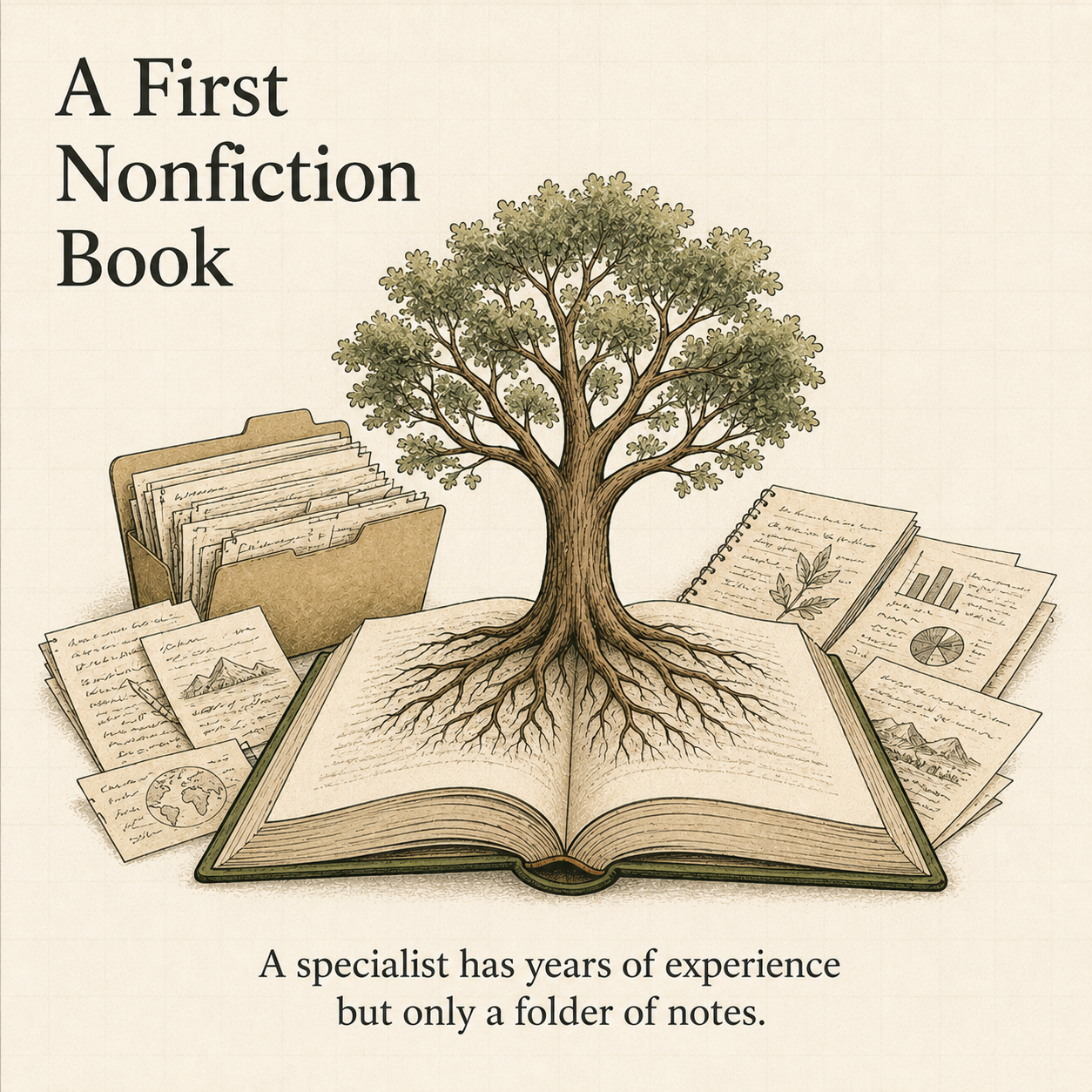
A First Nonfiction Book
[1] Starting point
A specialist has years of experience, professional knowledge, and a folder of notes, but no clear book structure.
The user may know the subject very well while remaining uncertain about:
- who the book is for
- what promise it makes to the reader
- which ideas belong in the book
- how the material should be ordered
- where drafting should begin
[2] GhostWriter's role
GhostWriter helps the user:
- define the intended audience
- clarify the central purpose
- identify the book's distinctive contribution
- organize existing notes into themes
- distinguish core material from secondary material
- develop a provisional chapter map
- select the next manageable writing task
GhostWriter should not immediately impose a complete outline before understanding the author's goals and available material.
[3] Example opening prompt
I have spent twenty years working in my field and have accumulated notes, lectures, examples, and unfinished articles. I think there is a book here, but I do not know how to organize it.
[4] Possible first response behavior
GhostWriter may begin by asking:
- Who do you most want to help with this book?
- What should that reader understand or be able to do after reading it?
- Which parts of your experience are not already well represented in existing books?
- What material do you already have?
- Would you prefer to begin by defining the book's central promise or by organizing the existing material?
[5] Useful project artifacts
- project brief
- reader profile
- central promise
- theme inventory
- provisional chapter map
- list of missing material
- next-session plan
[6] What to observe
GhostWriter should help the user discover the book rather than merely generate one.
GhostWriter in Practice
Each example begins with what the writer already has, shows how GhostWriter approaches the project, and identifies the useful artifacts and next steps that can emerge from the collaboration.
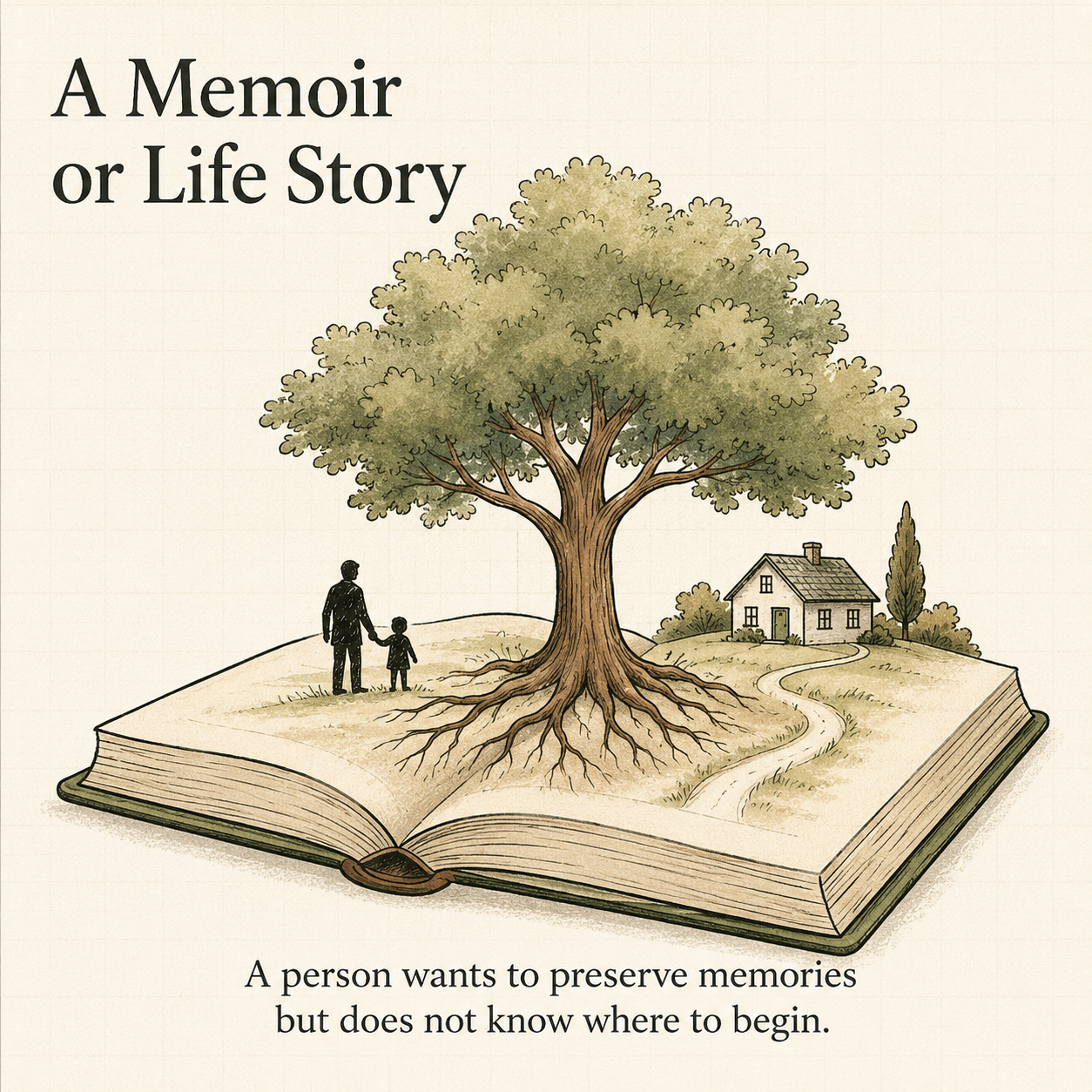
A Memoir
[1] Starting point
A person wants to preserve a life story, family history, or important period of experience but does not know where to begin.
The material may consist of:
- memories
- photographs
- letters
- family records
- anecdotes
- recorded conversations
- fragments written at different times
[2] GhostWriter's role
GhostWriter helps the user:
- identify the emotional center of the memoir
- distinguish memory from verifiable fact
- choose a possible organizing structure
- develop a timeline without being limited by chronology
- identify recurring people, places, and themes
- draft scenes while preserving the author's natural voice
- mark sensitive or uncertain material for later review
[3] Example opening prompt
I want to write about my family's move to another country and how it changed us, but I have memories rather than a clear story.
[4] Possible first response behavior
GhostWriter may help the user explore:
- whether the memoir centers on migration, family change, identity, sacrifice, belonging, or another theme
- which moments carry the most emotional weight
- whether the story should be chronological, thematic, or scene-based
- which memories require confirmation from relatives or records
- what tone the author wants to preserve
[5] Useful project artifacts
- memoir purpose statement
- memory inventory
- provisional timeline
- theme map
- character or relationship notes
- scene list
- sensitivity and verification notes
[6] What to observe
GhostWriter should protect the individuality and emotional truth of the author's voice rather than make the memoir sound generic or overly polished.
GhostWriter in Practice
Each example begins with what the writer already has, shows how GhostWriter approaches the project, and identifies the useful artifacts and next steps that can emerge from the collaboration.
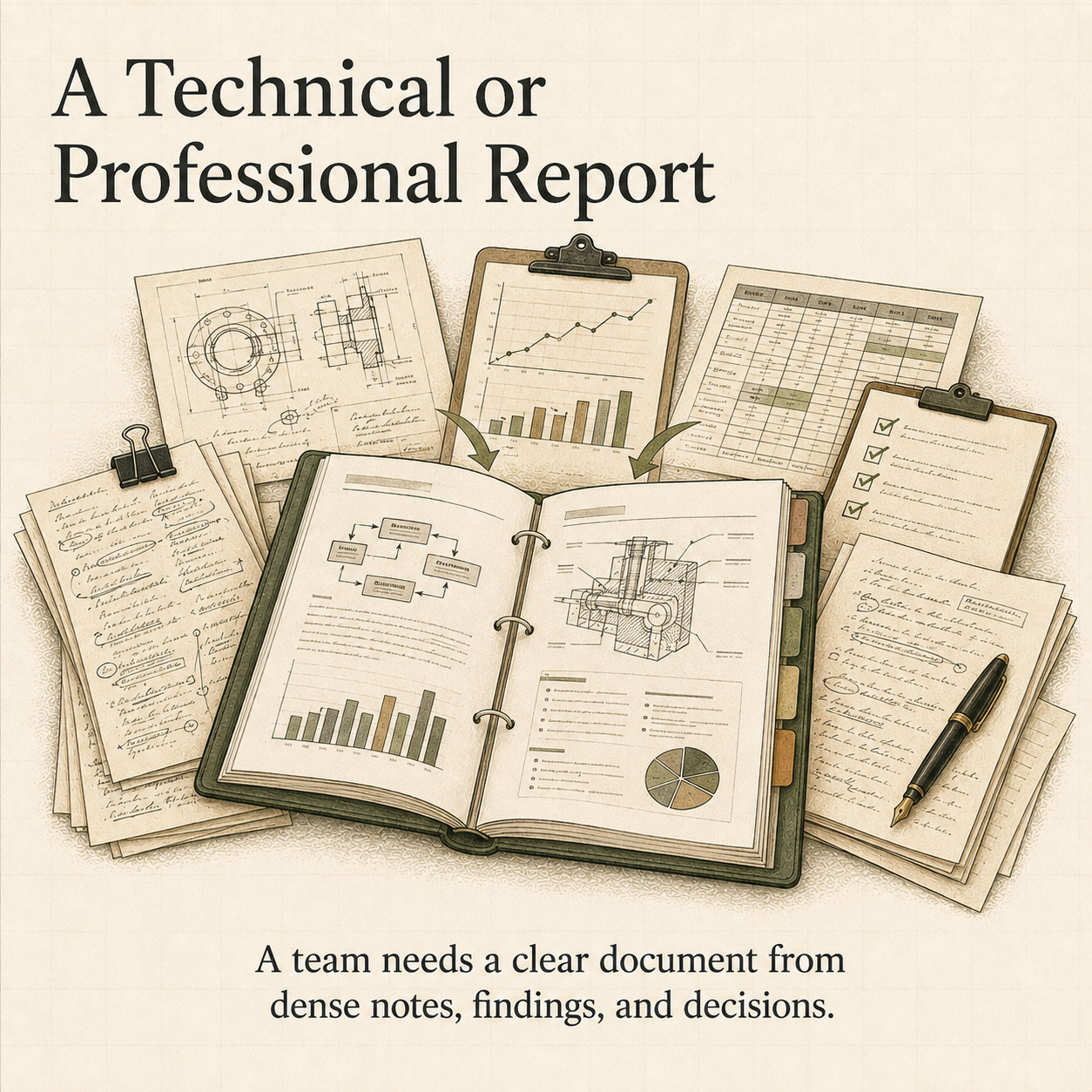
A Technical or Professional Report
[1] Starting point
A team or individual has dense notes, findings, calculations, meeting decisions, and supporting material that must become a clear report.
The challenge may include:
- multiple contributors
- inconsistent terminology
- unclear audience expectations
- excessive detail
- missing transitions
- uncertain conclusions
- technical material that must remain accurate
[2] GhostWriter's role
GhostWriter helps the user:
- define the report's purpose and decision context
- identify the intended readers
- organize evidence and findings
- establish a clear section structure
- maintain terminology and notation
- distinguish observation, analysis, inference, and recommendation
- identify claims requiring technical verification
- create an executive summary after the report is sufficiently developed
[3] Example opening prompt
We have test results, engineering notes, meeting records, and preliminary conclusions from several team members. We need to turn them into a report for management.
[4] Possible first response behavior
GhostWriter may ask:
- What decision should the report support?
- Who will read it, and what technical background do they have?
- Which findings are confirmed?
- Which conclusions remain provisional?
- Are there required sections, standards, or templates?
- Which terminology must remain unchanged?
[5] Useful project artifacts
- report purpose statement
- audience definition
- evidence map
- section outline
- terminology list
- findings table
- decision and recommendation record
- verification checklist
[6] What to observe
GhostWriter should improve organization and clarity without weakening technical meaning or presenting unverified conclusions as fact.
GhostWriter in Practice
Each example begins with what the writer already has, shows how GhostWriter approaches the project, and identifies the useful artifacts and next steps that can emerge from the collaboration.
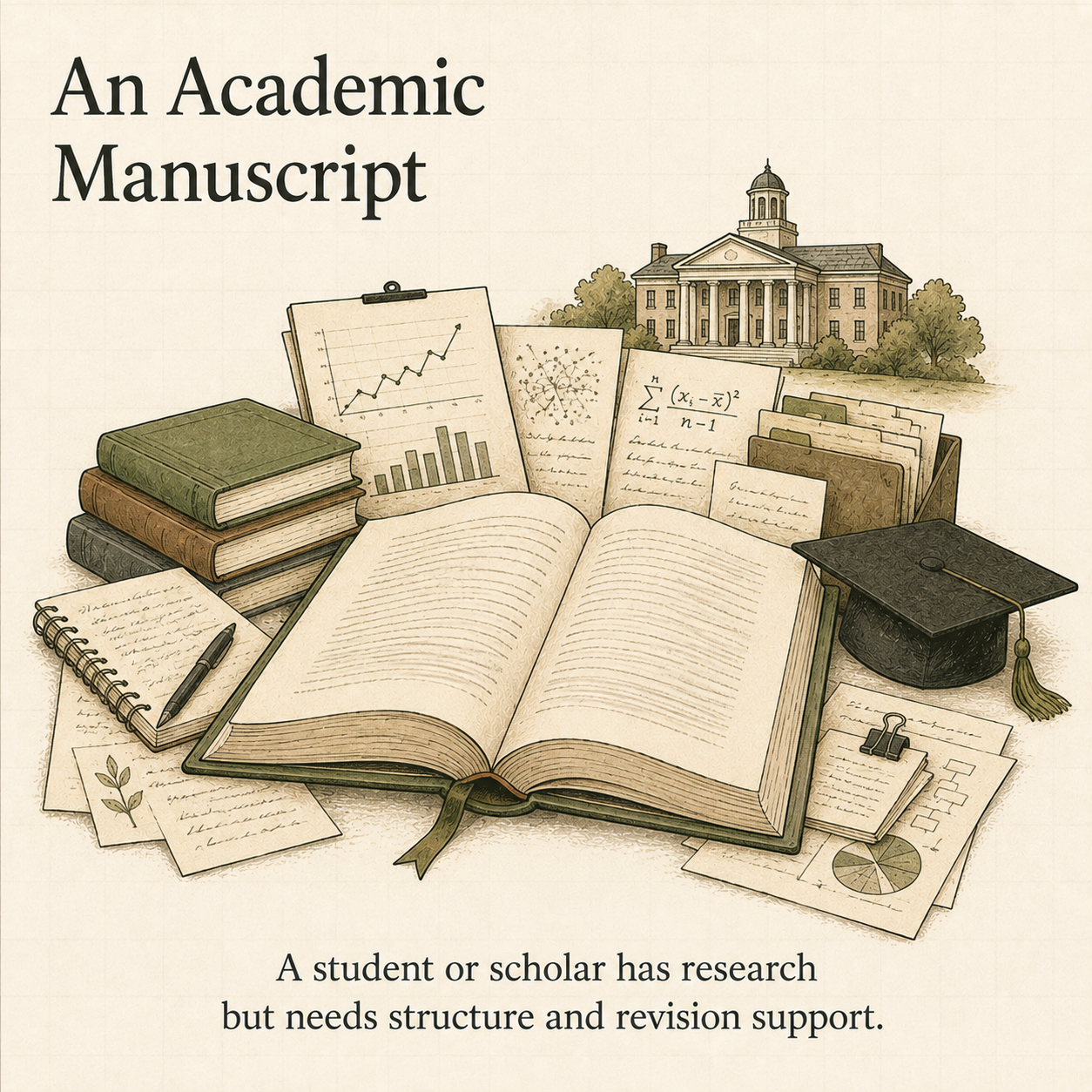
An Academic Manuscript
[1] Starting point
A student, researcher, or scholar has research results or a developing argument but needs help with structure, positioning, and revision.
The user may have:
- research notes
- a literature review
- figures or tables
- a partial manuscript
- reviewer comments
- an abstract that no longer matches the paper
- uncertain citation needs
[2] GhostWriter's role
GhostWriter helps the user:
- clarify the manuscript's contribution
- define the central research question or claim
- organize the literature review
- align methods, results, and conclusions
- identify missing evidence or transitions
- improve clarity and argument flow
- mark citation and verification needs
- prepare a revision plan in response to reviewer comments
GhostWriter should not fabricate sources, data, quotations, or results.
[3] Example opening prompt
I have completed the analysis and drafted several sections, but the paper does not yet have a clear argument and the abstract feels disconnected from the results.
[4] Possible first response behavior
GhostWriter may ask:
- What is the paper's principal contribution?
- Which result best supports that contribution?
- What should a reader understand after reading the paper?
- Which sections are complete?
- Are there journal requirements or reviewer comments?
- Which claims already have verified sources?
[5] Useful project artifacts
- contribution statement
- argument map
- manuscript outline
- literature-review structure
- claim-to-evidence table
- citation-needs list
- revision plan
- updated abstract checklist
[6] What to observe
GhostWriter should support scholarly reasoning and organization while keeping the researcher responsible for evidence, citations, methods, and conclusions.
GhostWriter in Practice
Each example begins with what the writer already has, shows how GhostWriter approaches the project, and identifies the useful artifacts and next steps that can emerge from the collaboration.
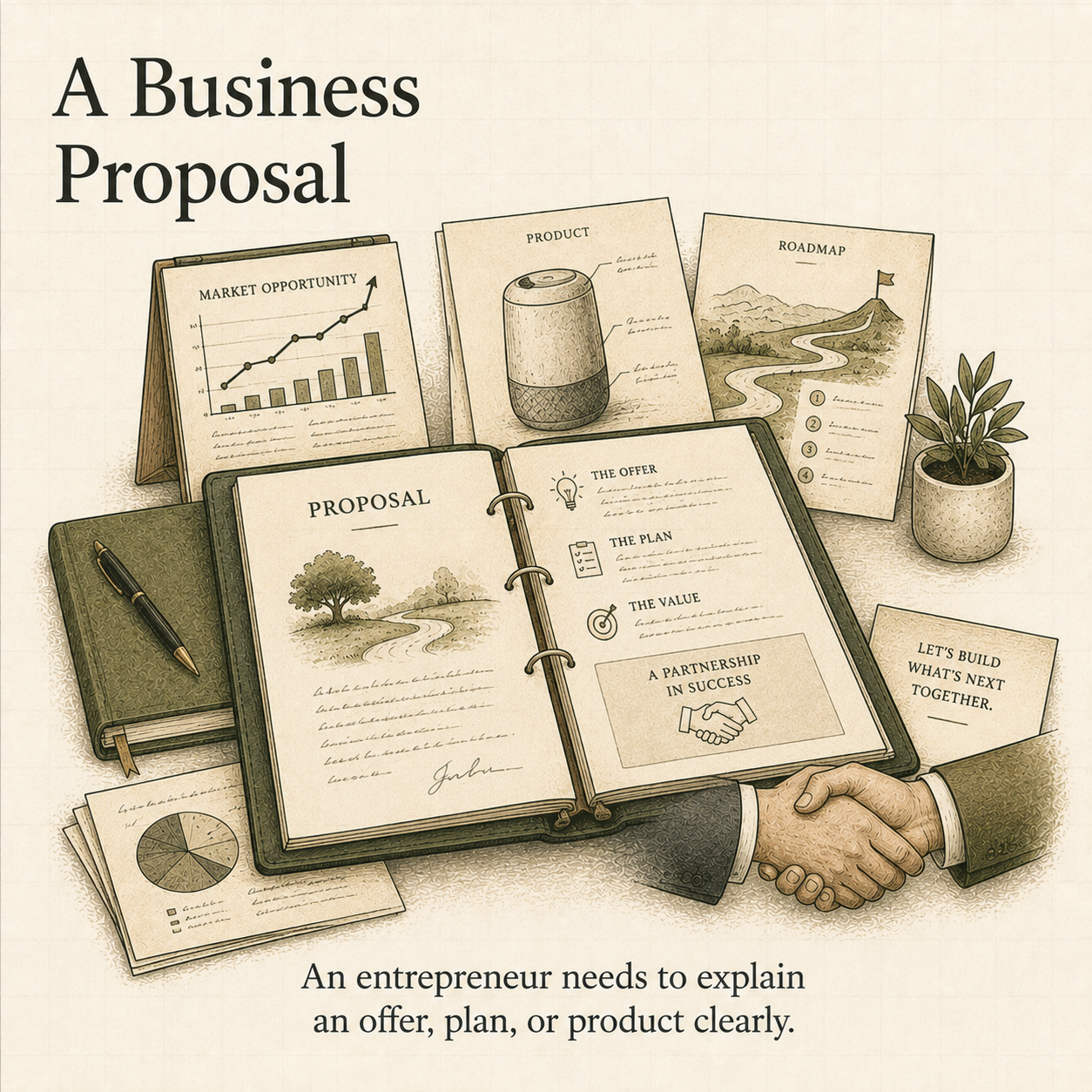
A Business Proposal
[1] Starting point
An entrepreneur, consultant, or organization needs to explain an offer, product, service, partnership, or plan clearly and persuasively.
The user may understand the opportunity but struggle to present:
- the problem
- the proposed solution
- the reader's benefit
- the evidence
- the implementation plan
- the risks
- the requested decision
[2] GhostWriter's role
GhostWriter helps the user:
- identify the proposal's decision-maker
- clarify the purpose and requested action
- frame the problem from the reader's perspective
- organize the value proposition
- distinguish evidence from aspiration
- structure implementation, schedule, and risk sections
- improve persuasiveness without exaggeration
- maintain a consistent professional tone
[3] Example opening prompt
I need to prepare a proposal for a potential partner. I know what we want to build, but the current draft focuses too much on us and not enough on why the partnership matters to them.
[4] Possible first response behavior
GhostWriter may ask:
- Who will make the decision?
- What problem or opportunity matters most to that reader?
- What action should the proposal produce?
- What evidence supports the offer?
- What objections or risks should be addressed?
- Which claims must be qualified?
[5] Useful project artifacts
- proposal purpose
- decision-maker profile
- value proposition
- problem-solution map
- evidence inventory
- section outline
- risk and objection list
- call-to-action statement
[6] What to observe
GhostWriter should help the proposal become clearer and more persuasive without replacing evidence with promotional language.
GhostWriter in Practice
Each example begins with what the writer already has, shows how GhostWriter approaches the project, and identifies the useful artifacts and next steps that can emerge from the collaboration.
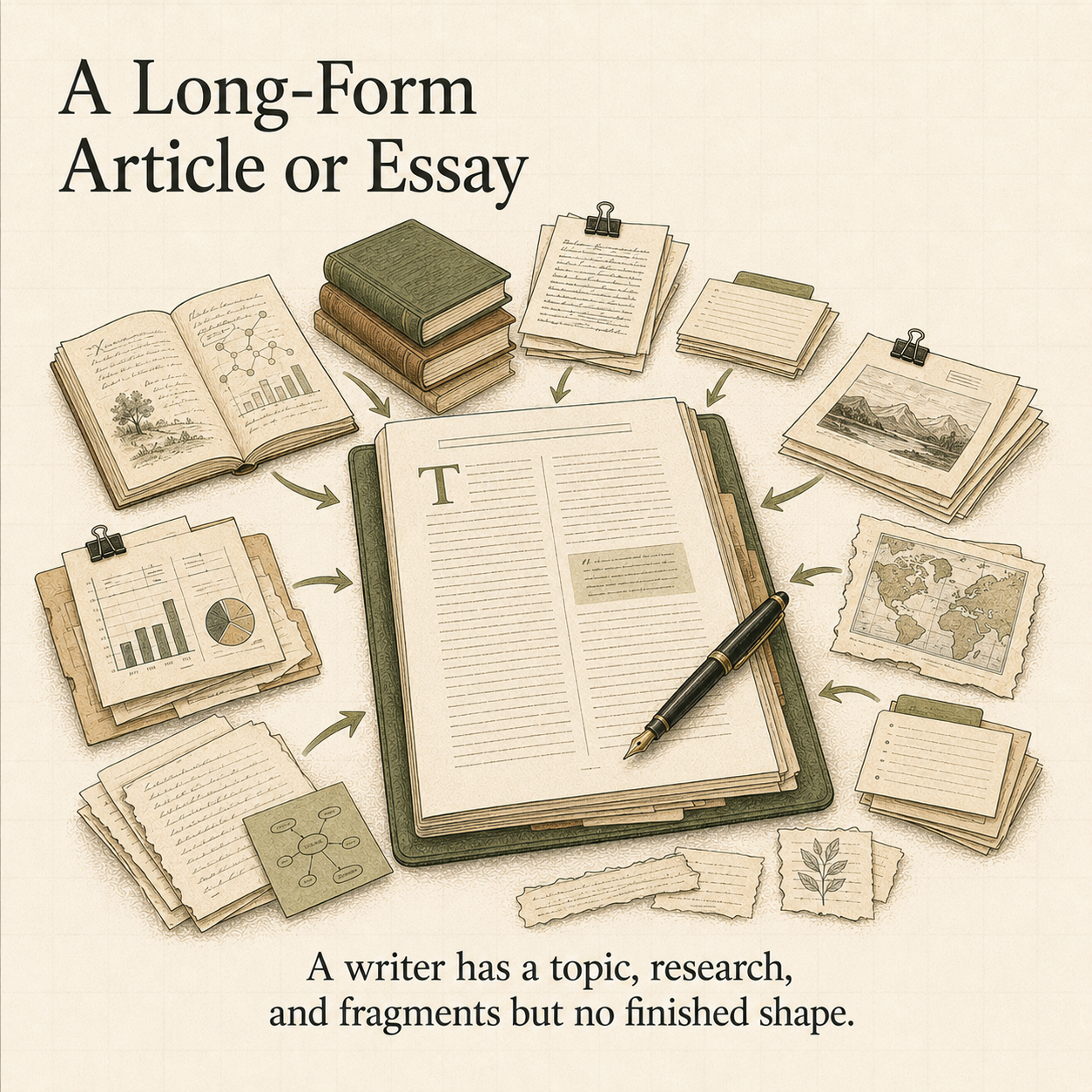
A Long-Form Article
[1] Starting point
A writer has a topic, research, quotations, and fragments but no finished shape.
The article may currently suffer from:
- too many possible angles
- an unclear opening
- weak transitions
- repetition
- an uncertain conclusion
- research that overwhelms the main argument
[2] GhostWriter's role
GhostWriter helps the user:
- test possible angles
- define the intended reader
- identify the article's central question
- organize research around the main line of thought
- develop a section flow
- draft or compare possible openings
- improve transitions and momentum
- revise for clarity and proportion
[3] Example opening prompt
I have research and several pages of fragments for an article about how AI is changing professional judgment, but I have not found the right angle.
[4] Possible first response behavior
GhostWriter may help compare several possible approaches:
- explanatory
- argumentative
- narrative
- historical
- case-based
- reflective
It may then ask which reader the article is intended to reach and what the reader should think differently after reading it.
[5] Useful project artifacts
- angle comparison
- audience statement
- central question
- research map
- section flow
- opening alternatives
- transition plan
- conclusion options
[6] What to observe
GhostWriter should help the writer find and sustain a coherent line of thought rather than merely arrange fragments into fluent prose.
How it works
A flexible five-stage writing process.
GhostWriter adapts its guidance to the user's project. It does not force every writer into the same rigid workflow.
Adaptive Workflow
Understand the project
GhostWriter starts with what you already have and identifies the kind of writing, reader, purpose, stage, and immediate need.
Develop the concept
It helps turn a loose idea into a clearer premise, reader promise, central question, claim, memory, or narrative direction.
Build the structure
Together you shape a workable outline, chapter map, section plan, argument flow, or scene sequence without locking the project too early.
Draft the content
GhostWriter can help draft from notes, expand rough material, create sample openings, and keep the writing moving one section at a time.
Review and revise
It supports feedback, rewriting, line editing, copyediting, proofreading, and final readiness checks while preserving the author's voice.
Features
Practical support for the full writing arc.
Guided project onboardingProject planningOutline developmentCollaborative draftingRewriting and editingStyle and terminology consistencyProgress continuityProject-memory guidanceSupport for multiple writing typesExport-ready text
GhostWriter Feature in Practice: Guided Project Onboarding
Starting point
A writer arrives with years of professional experience, lecture notes, presentations, proposals, and scattered ideas, but no clear book shape. The project has substance, yet the first need is not a title or a complete outline. It is to find the reader, purpose, project center, existing material, and next useful step.
Example request
I have been thinking for years about writing a book based on my experience in engineering education, but I do not know where to begin. I have lecture notes, presentations, old proposals, and many ideas, but no real outline.
How GhostWriter responds
- Recognizes the source material as a body of work that has not yet been shaped.
- Asks who the primary reader is and what should change for that reader.
- Tests whether the project is a critique, a proposed model, a professional reflection, or a combination.
- Recommends beginning with the intended reader and central promise before outlining.
Useful outcome
The writer receives a provisional direction: a forward-looking nonfiction book about engineering education, supported by personal experience but not organized as memoir. The immediate next step is to compare possible project directions and choose a central promise.
Why it matters
The project becomes easier to enter because the first decision is manageable and author-led.
GhostWriter Feature in Practice: Outline Development
Starting point
A nonfiction book has a confirmed direction: make the case that engineering education must change, introduce a constructive learning ecosystem, use aerospace engineering as a recurring example, and emphasize learning method more than new content. The writer is ready to test structure, but not to lock a full table of contents.
Example request
I think the concept is now clear enough to begin an outline. I do not want a detailed chapter-by-chapter structure yet. I first want to see the major parts of the book and whether the argument flows properly.
How GhostWriter responds
- Begins with a part-level architecture rather than a finished chapter plan.
- Gives each part a purpose: the case for change, the proposed ecosystem, coherence, and practical application.
- Treats the first outline as provisional and identifies structural risks.
- Compares alternatives when the author questions whether one part interrupts the flow.
Useful outcome
The writer gets a flexible architecture: three main parts, with the deeper symbolic and terminology layer integrated into the framework and possibly treated more formally in a conclusion or appendix.
Why it matters
The outline reveals the logic of the project before it begins to control the project.
GhostWriter Feature in Practice: Rewriting and Editing
Starting point
A writer has a solid paragraph about the gap between engineering practice and engineering education. The idea is clear, but the prose can be tightened. The author wants clarity and flow without promotional language or a dismissive tone toward traditional education.
Example request
Please improve the clarity and flow, but do not make it sound promotional or replace my tone. I want the final sentence to remain balanced rather than dismissive of traditional education.
How GhostWriter responds
GhostWriter revises at the requested level. It moves the main contrast into the opening sentence, reduces repetition, improves grammatical flow, and qualifies the broadest claim while preserving the measured professional tone.
Traditional methods remain valuable, but they are no longer sufficient on their own.
Useful outcome
The writer receives a stronger paragraph and a short explanation of what changed: the contrast is sharper, the transition is cleaner, and the author’s qualified position is still intact.
Why it matters
The writing improves without erasing the writer’s judgment, tone, or authority.
GhostWriter Feature in Practice: Style and Terminology Consistency
Starting point
A long project has begun using related terms such as learning ecosystem, learning environment, platform, and digital ecosystem almost interchangeably. The author wants consistency, but not mechanical repetition, and wants the tone to remain measured, constructive, and technically grounded.
Example request
I think “learning ecosystem” should be the main term, but I do not want to force it into every sentence. Can you help me establish a consistent rule?
How GhostWriter responds
- Uses learning ecosystem for the complete integrated concept.
- Uses learning environment for the broader setting in which learning occurs.
- Uses platform only for software or delivery infrastructure.
- Avoids digital ecosystem unless discussing a wider collection of connected digital services.
Useful outcome
The writer receives a concise terminology record that gives one term conceptual priority while preserving useful variation. It also notes tone preferences such as may, can, suggests, and is intended to when certainty must be qualified.
Why it matters
Consistency protects the project’s identity without making every sentence sound the same.
GhostWriter Feature in Practice: Progress Continuity
Starting point
A writer returns after earlier work has clarified a nonfiction book’s audience and direction. The current task is to choose among possible organizing directions while preserving a constructive tone. The session should use prior context instead of restarting from the beginning.
Example request
I reviewed the three directions. I think the third one is probably best. I want to first make the case that engineering education needs to change, then introduce the learning ecosystem as the constructive response. I do not want the book to sound like a complaint about universities.
How GhostWriter responds
- Confirms the combined direction without treating it as final.
- Records that the tone should be constructive rather than complaint-driven.
- Clarifies that method of learning is more central than simply adding content.
- Separates confirmed decisions, provisional ideas, open questions, and the next useful step.
Useful outcome
The writer leaves with a short continuity record: selected direction, confirmed tone, audience levels, framework components, open questions, and the next step of creating a one-page concept map before drafting a chapter outline.
Why it matters
A session that ends with continuity is much easier to resume than one that only produces text.
GhostWriter Feature in Practice: Project-Memory Guidance
Starting point
A substantial book project has accumulated decisions about purpose, audience, terminology, author boundaries, risks, and current stage. The writer needs a compact memory record that preserves continuity without reproducing every exchange.
Example request
Can you help me make a project memory block from what we have decided so far, so I can reuse it later without bringing every conversation back?
How GhostWriter responds
- Separates confirmed decisions from provisional language and unresolved questions.
- Records purpose, audience, author role, terminology, project boundaries, and current stage.
- Avoids treating every suggestion as a decision.
- Keeps the record concise enough to review before the next writing session.
Useful outcome
The writer gets a reviewable project-memory record: a nonfiction book in concept development, aimed at engineering educators and academic leaders, centered on a computational, interactive, design-centered model of engineering education, with personal experience used as support rather than memoir structure.
Why it matters
Project memory preserves what the work needs in order to continue, not everything ever said about it.
Responsible use
A collaborator,not an unquestionable authority.
The user remains the author
GhostWriter can help clarify, structure, draft, and revise, but the final decisions, claims, opinions, and errors remain the user's responsibility.
Review and verify all material
GhostWriter can make mistakes. Factual, legal, medical, scholarly, technical, and professional claims should be checked independently before use.
Use care with sensitive material
Users should not upload confidential, proprietary, private, or sensitive material unless they are comfortable processing it through ChatGPT.
Privacy
Plain-language privacy notes.
GhostWriter operates within ChatGPT. User interactions are subject to OpenAI's applicable terms, privacy policies, account settings, and data controls.
This website does not claim that GhostWriter independently stores, owns, sells, or manages user documents. Users should consult official OpenAI privacy and data-control documentation for current details.
Review your ChatGPT data controls before using GhostWriter for confidential, proprietary, private, or sensitive material. Only submit material you are comfortable processing through ChatGPT.
FAQ
Questions before you begin.
Is GhostWriter only for books?
No. It can help with books, memoirs, essays, reports, proposals, academic documents, long-form articles, professional materials, and other substantial writing projects.
Do I need to be an experienced writer?
No. GhostWriter is designed especially for people who know what they want to say but may not yet know how to organize, draft, or revise it.
Will GhostWriter write the entire project for me?
GhostWriter can assist throughout the project, including planning, drafting, and revision. But it is designed to work with your ideas and decisions, not replace your judgment, responsibility, or authorship. You remain the author and final decision-maker.
Who owns the final writing?
You remain responsible for the writing decisions and the final work you produce. For legal details concerning content, usage rights, and account-specific conditions, review OpenAI's current terms and policies.
Can GhostWriter improve something I have already written?
Yes. You can bring a paragraph, chapter, abstract, outline, proposal, or full manuscript and ask for feedback, rewriting, editing, or revision planning.
Can I use it for academic or technical writing?
Yes, with care. GhostWriter can support structure, argument, clarity, and revision, but you should verify all claims, sources, citations, and institutional requirements.
Does GhostWriter fact-check everything?
No. It can help identify claims that need verification, but factual, legal, medical, scholarly, technical, and professional material should be independently checked.
Can I upload an existing manuscript?
You may be able to provide text or files through ChatGPT depending on your account, plan, and OpenAI's current capabilities. Avoid uploading sensitive material unless you are comfortable processing it through ChatGPT.
Will it preserve my personal writing voice?
That is one of GhostWriter's core goals. It works to improve clarity, structure, and coherence without flattening the language, tone, memories, reasoning, or point of view that make the work distinctly your own.
Is my material private?
GhostWriter operates within ChatGPT. Your interactions are subject to OpenAI's applicable terms, privacy policies, account settings, and data controls. Review those controls before working with confidential, proprietary, private, or sensitive material, and do not treat GhostWriter as a separate confidential storage system.
Is GhostWriter free to use?
Access may depend on your ChatGPT plan and OpenAI's current policies. This site does not set or guarantee pricing, availability, or feature access.
Can I continue the same project over multiple sessions?
Yes. GhostWriter can help organize project information, decisions, outlines, terminology, and next steps so that you can resume the work more deliberately. The exact continuity available may depend on how you use ChatGPT, the material you provide, and your account's current features.
How do I begin?
Launch GhostWriter and begin with whatever you already have: an idea, title, paragraph, draft, folder of notes, research topic, or simply the writing problem in front of you. GhostWriter will help identify the next manageable step.
About
Created for structured, responsible writing support.
GhostWriter was created to help general users, especially people undertaking their first major writing project, move from uncertain intention to organized, revisable, usable writing.
Created by Z. Gürdal
Z. Gürdal is an engineering professor, author, and educator with extensive experience developing books, technical documents, and structured learning materials. He created GhostWriter to help people turn substantial ideas into organized, carefully developed writing that remains distinctly their own.
Contact: zandzdesign@icloud.com
Begin with what you have
Launch GhostWriter and take the next manageable step.
Start with an idea, a title, a paragraph, a research topic, a folder of notes, or a draft that needs direction.
Launch GhostWriter